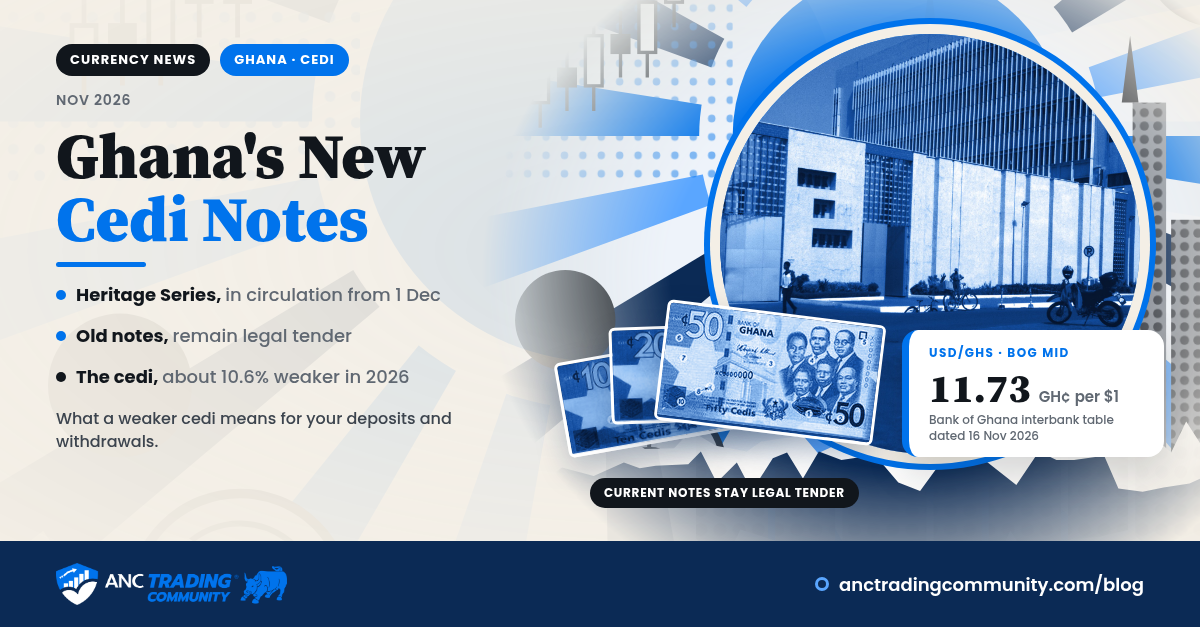
Ghana’s new cedi notes, the Heritage Series, enter circulation on 1 December 2026, and the old notes stay legal tender. So there is no need to rush to swap cash. However, the notes do not change what the cedi is worth. Meanwhile, the cedi has slipped to about GH¢11.7 per dollar on the interbank market. That is roughly 10.6% weaker than at the end of 2025.
For traders, those are two separate stories. First, there is the paper in your wallet. Second, there is what your deposits and withdrawals cost.
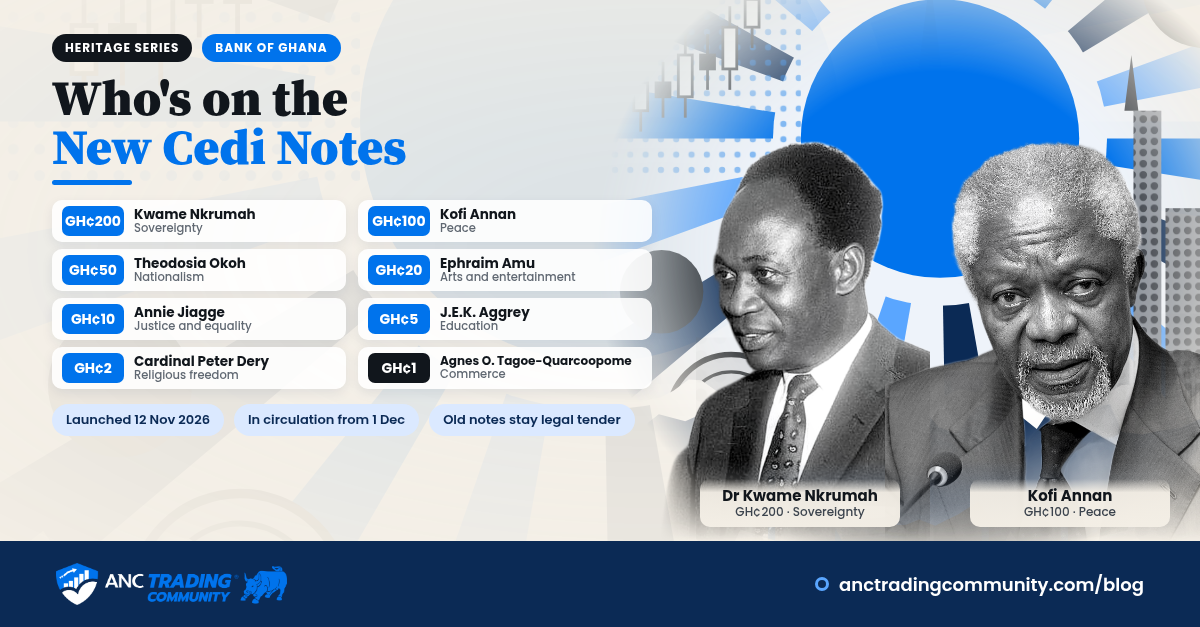
Ghana new cedi notes: who is on each Heritage Series banknote, from Kwame Nkrumah to Kofi Annan
What the New Cedi Notes Are
President John Dramani Mahama launched the Ghana Cedi Heritage Series in Accra on Thursday, 12 November 2026, according to the Ghana News Agency. The new cedi notes cover all eight values, from GH¢1 to GH¢200.
Bank of Ghana Governor Dr Johnson Pandit Asiama said the notes have stronger security features against fakes. He added that they last longer and are smaller. The central bank also unveiled a Cedi App to help people check the notes.
Each note carries a national figure. For example, Dr Kwame Nkrumah is on the GH¢200 and Kofi Annan is on the GH¢100, according to 3News.
Do Old Notes Still Work?
Yes. The new cedi notes will circulate alongside the current series, which remains legal tender. In fact, the Bank of Ghana said in September there is “no need for the public to rush to exchange or withdraw existing notes”.
That matters, because a cash changeover can attract fraud. So be wary of anyone who offers to “swap” your old notes for a fee. Also, learn the new security features before 1 December.
The Cedi’s Weaker Exchange Rate
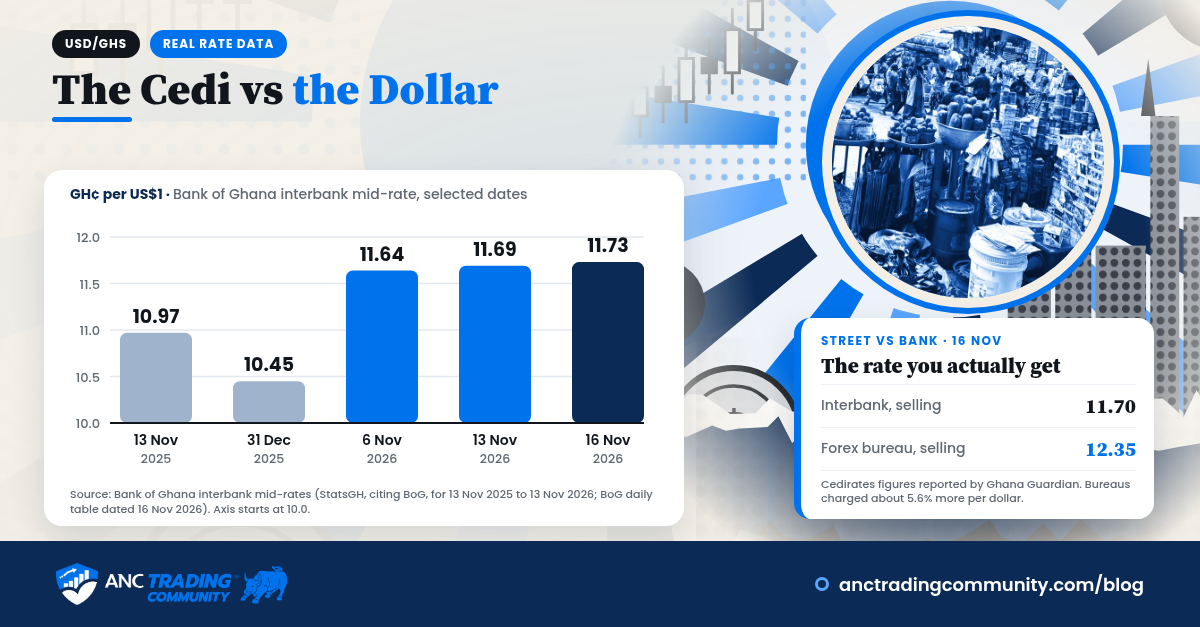
The rate is a different matter. StatsGH, citing Bank of Ghana data, put the interbank mid-rate at GH¢11.69 per dollar on Friday, 13 November. A week earlier, it was GH¢11.64. By contrast, it was GH¢10.45 on 31 December 2025. Then the central bank’s table dated 16 November showed GH¢11.73.
Why the slide? Reuters reported on 12 November that steady corporate demand for dollars was outpacing supply. Andrews Akoto, head of trading at Absa Bank Ghana, told Reuters the cedi was “expected to remain under pressure”. He pointed to demand “from the services and commerce sectors”.
Ghana new cedi notes and the USD/GHS exchange rate: Bank of Ghana interbank mid-rate on selected dates
What GHS Traders Should Know About Deposits and Withdrawals
Whether the notes in your wallet are new or old, the cedi rate is what counts. Many trading accounts run in US dollars. So when you fund in cedis, someone converts your money. As a result, a weaker cedi means each deposit buys fewer dollars. On the other hand, a dollar profit turns into more cedis when you withdraw.
However, the rate you get is rarely the interbank rate. On 16 November, forex bureaus sold dollars at about GH¢12.35, according to Cedirates figures reported by Ghana Guardian. Yet the interbank rate was close to GH¢11.70. That gap is a cost, much like a spread.
Here is a short checklist:
Check the conversion rate first. Compare your broker’s or payment app’s rate with the interbank rate before you deposit.
Know your account currency. If it is in dollars, your cedi balance moves with USD/GHS even when you do not trade.
Size risk in your account currency. Your stop-loss works in dollars, not cedis.
Ignore the cash changeover. The new cedi notes do not affect margin, leverage or open trades.
The Heritage Series enters circulation on 1 December 2026, according to the Bank of Ghana.
Are the old cedi notes still legal tender?
Yes. The old notes remain legal tender and will circulate alongside the new cedi notes.
Do the new cedi notes change the exchange rate?
No. New cedi notes change the paper, not the value. Instead, the rate moves on supply and demand for dollars.
Why is the cedi weaker against the dollar?
According to Reuters, corporate demand for dollars from the services and commerce sectors has been outpacing supply.
What is the cedi to dollar rate today?
The Bank of Ghana publishes an interbank rate each working day. Its table dated 16 November showed GH¢11.73. However, banks and bureaus charge their own rates.
Also trade gold? Read our beginner’s guide to trading gold, or our guide to US forex brokers and CFTC rules.
Want the desk side of this? Join ANC Trading Community free for the analysis, tools and community. Choosing where to trade? Compare regulated brokers side by side on our broker comparison page, or browse our top broker listing to find the right fit.
Go Beyond the Charts, hosted by ANC Trading Community, is an exclusive FX VIP business meeting on 22 November 2026. It is free to join. So register to attend and meet leaders, brokers and serious traders in one room.
Risk warning: Forex, gold and CFDs are complex instruments and come with a high risk of losing money rapidly due to leverage. A high percentage of retail investor accounts lose money when trading CFDs. Currency moves can also change the value of your deposits and withdrawals. This article is for information only and is not investment advice.